
TEACHING STORYTELLING
Professor Lori Kissinger
A Master Instructor at the Communication Department of Middle Tennessee State University
She incorporates storytelling into communication with people with Down Syndrome by teaching them to tell stories. In a group setting, she tells a simple story and allows her audience to pick four elements: a main character, the problem the main character faces, the problem’s resolution, and the ending. As a group, they write the story, with a narrowed focus on where the group resides.

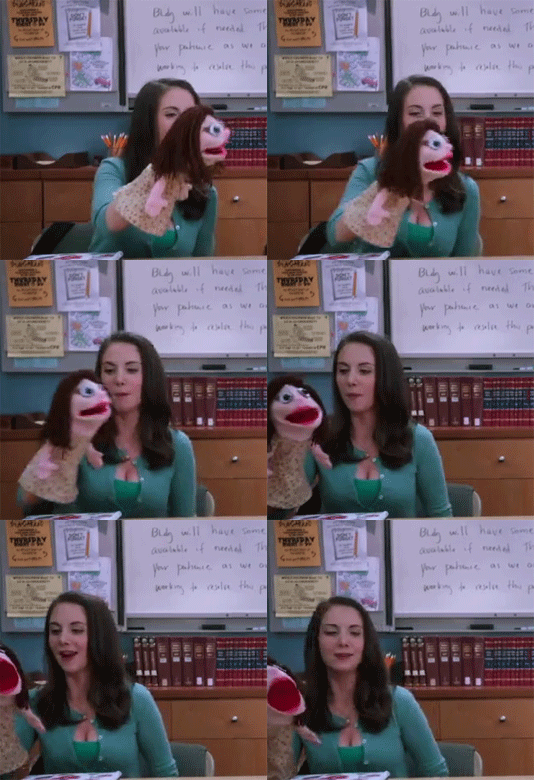
She then allows individuals from the group to draw puppets out of a large plastic bag, which serves as their main character. With each puppet as a focus, everyone is invested and excited to give the puppet a story.

Moving onward from the basics of storytelling, Professor Kissinger then teaches individuals HOW to tell stories. She does this by having individuals act out their stories as they tell them, allowing individuals to learn to tell their stories without words.

This is a description of your education or professional experience. Add a summary of what you studied or where you worked, and be sure to include relevant accomplishments or milestones. Don’t forget to adjust the dates listed.
Once everyone has reached a level of comfort with storytelling, Professor Kissinger allows everyone to pick out their favorite puppet or stuffed animal they already own, and then takes their story ideas and turns them into short stories. Oftentimes, these stories utilize rhyming. “Many children's stories rhyme,” Professor Kissinger notes, “as it provides a rhythm that is easier to remember and follow.”



This method allows people with Down Syndrome to essentially hold the keys to a different way of communicating that may strengthen social bonds, establish comradery, and inspire self-confidence. This kind of social empowerment is crucial for placing people with Down Syndrome on an equal platform of communication, creativity, and opportunity.
While Kissinger’s methods do not necessarily emerge from a theory-based approach, her credibility as a long-time public speaker working around people with disabilities, as well as her place in academia, not only give us a reason to trust her professional opinion – they have also given her a plethora of observational evidence and methods that seem to work.

“People are more likely to do well if they are having fun and feel confident,” she stated, in an interview conducted by communications student Sav Buist. “The more times they can do something well, the more confident they become.”